



Patchy, thin grass often comes from compacted soil that blocks oxygen, water, and nutrients, leaving roots weak and turf vulnerable to weeds and erosion. Aerating and seeding is a proven fix: aeration opens channels in the soil, and seeding right after fills bare spots for thicker growth. This guide explains why lawns decline, how these techniques work together, when to do them, what tools to use, and how to care for the lawn afterward—plus common mistakes to avoid—to help you restore a lush, healthy lawn.
Why Aerating and Seeding Are More Important to Your Lawn Than You Think
When it comes to maintaining a lush, green lawn, many homeowners focus on watering and mowing, but often overlook the critical processes of aerating and seeding. Aerating and seeding are essential steps that work hand-in-hand to revitalize compacted soil and thin turf, transforming tired lawns into vibrant, healthy landscapes. But what exactly is aerating and seeding, and why is it so important?
Understanding Aerating and Seeding
Aerating is the process of perforating the soil with small holes to alleviate soil compaction and allow air, water, and nutrients to penetrate deep into the root zone. Over time, lawn soil becomes densely packed due to foot traffic, heavy machinery, and natural settling, which restricts root growth and inhibits absorption. Seeding, often performed after aeration, involves spreading grass seed over the lawn to fill in bare or thinning areas, giving your turf a fuller and more resilient appearance.
The combination of aerating and seeding addresses both the soil’s physical condition and the turf’s density, two crucial aspects that determine lawn health. Without aeration, seeds struggle to reach the soil’s fertile layer, and without seeding, compacted soil remains underutilized, limiting the grass’s potential to grow thick and robust.
The Importance of Aerating and Seeding Backed by Data
According to the National Lawn Institute of America, lawns that undergo routine aeration and seeding show a 30% increase in root depth and a 25% improvement in water absorption efficiency. This means water flows deeper into the soil, reducing runoff and helping grass survive drought periods. Additionally, a study published in the Journal of Turfgrass Science found that lawns treated with aeration and overseeding exhibited a 40% greater density and a significant decline in weed presence compared to untreated lawns.
Not only do these processes improve the aesthetic appeal of your yard, but they also contribute to environmental benefits such as reduced lawn maintenance costs and lower water consumption. Healthy lawns act as natural filters, absorbing pollutants and improving air quality, a vital consideration as urban areas continue to expand.
A Real-Life Success Story
Consider the case of the Johnson family in Ohio. Their once patchy and lifeless front yard was consistently struggling with thin grass and areas of bare soil due to high foot traffic and clay-heavy soil, conditions ripe for compaction. After consulting with local lawn care experts, they implemented an aerating and seeding program during early spring. The aeration holes allowed nutrients and moisture to reach the grassroots, while overseeding filled in the bald patches.
Within a few months, the Johnsons witnessed significant improvement: their lawn grew thicker, greener, and more resilient against weeds and disease. What was once a source of frustration became the envy of their neighborhood, enhancing both curb appeal and property value.
Aerating and seeding might seem like simple lawn care tasks, but their impact is profound. By relieving soil compaction and replenishing your turf, these solutions breathe new life into your lawn, ensuring it remains healthy and beautiful year-round. In the following sections, we’ll explore the detailed steps and best practices for aerating and seeding, so you can experience these benefits firsthand.
How to Apply Aerating and Seeding Step by Step for a Lush, Healthy Lawn
Revitalizing compacted soil and thin turf through aerating and seeding can transform your lawn from dull and lifeless into a vibrant, green carpet. By following a structured approach, you ensure each step maximizes root growth, improves soil health, and promotes thick, lush grass. Here’s a detailed guide to applying aerating and seeding effectively:
Step 1: Evaluate Your Lawn’s Current Condition
Before beginning, assess the lawn to understand the extent of soil compaction and thinning:
– Perform a soil compaction test: Try pushing a screwdriver or a metal rod into the soil. Difficulty indicates compaction.
– Examine turf density: Look for bare patches or areas where grass looks sparse.
– Check soil moisture: Ideal conditions for aerating require the soil to be moist but not waterlogged.
Understanding your lawn’s condition will help you decide the right timing and method for aeration and overseeding.
Step 2: Choose the Right Time for Aerating and Seeding
Timing plays a key role in successful lawn rejuvenation:
– Cool-season grasses: Aerate and seed in early fall or early spring.
– Warm-season grasses: Late spring to early summer works best.
– Avoid extreme heat or drought to reduce stress on grass seedlings and to help seed germinate well.
Step 3: Prepare Your Lawn for Aeration
Preparation ensures more efficient soil penetration and seed placement:
– Mow your lawn: Cut grass shorter than usual (about 2 inches) to promote seed-to-soil contact.
– Water the soil: Lightly irrigate one or two days before aeration so the soil is moist but firm.
– Mark sprinkler heads and buried cables: Aerators can damage underground utilities.
Step 4: Aerate the Lawn Properly
Aerating removes plugs of soil, creating room for air, water, and nutrients:
– Use the right aerator: Core aerators that remove soil plugs are more effective than spike aerators.
– Make multiple passes: Cross your lawn with the aerator in perpendicular directions for full coverage.
– Focus on compacted areas: Concentrate on high-traffic or problem zones.
– Collect soil plugs: Consider removing or breaking up the plugs to improve soil structure.
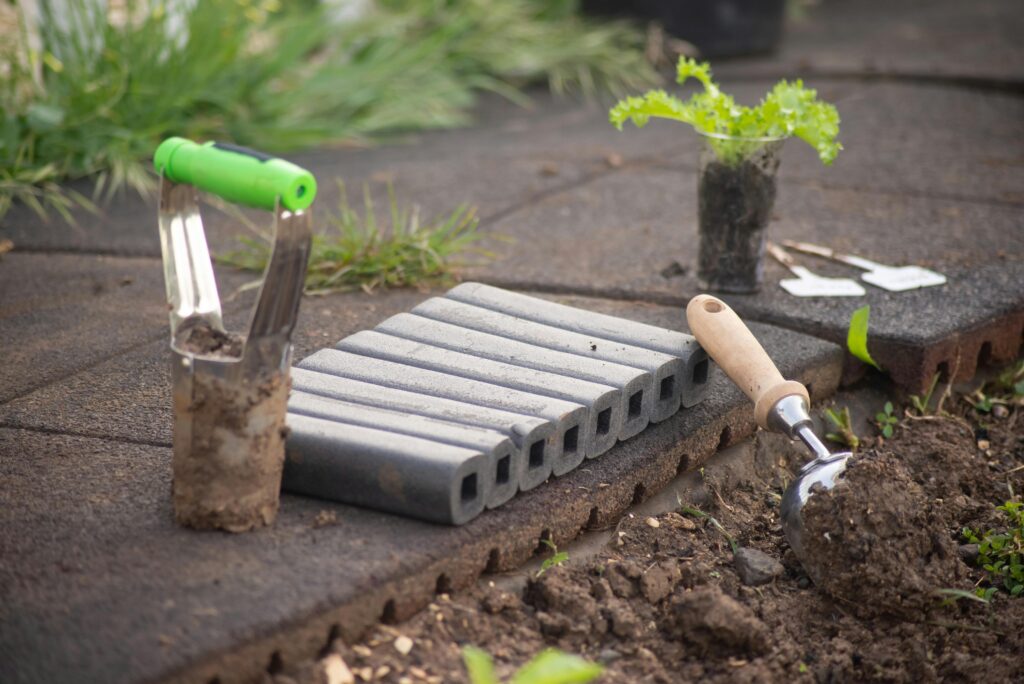
Example Image: Core aerator removing plugs from compacted lawn soil
Step 5: Overseed Immediately After Aeration
Seed needs to contact soil directly to germinate and establish well:
– Select quality seeds: Choose grass seed suited to your climate, soil type, and lawn sunlight levels.
– Apply seed evenly: Use a broadcast spreader or drop spreader to ensure uniform coverage.
– Apply seed at recommended rates: Refer to seed packaging for guidance to avoid overseeding or underseeding.
– Rake lightly: Lightly rake the seeded area to help seeds settle into the aeration holes and soil surface.
Step 6: Apply Fertilizer and Topdressing
Providing nutrients and improving soil texture supports seed growth:
– Fertilizer: Use a starter fertilizer high in phosphorus to encourage root development.
– Topdressing: Spread a thin layer of compost or topsoil to protect seed and improve moisture retention.
– Avoid burying seed too deep; a light topdressing works best.
Step 7: Water Consistently and Carefully
Proper watering is critical for seed germination and lawn recovery:
– Initial watering: Keep the soil consistently moist for the first 2–3 weeks.
– Water lightly and frequently: 2-3 times a day in short bursts to avoid waterlogging.
– After germination: Gradually decrease watering frequency while increasing depth to encourage deep rooting.
– Use a sprinkler to distribute water evenly.
Step 8: Maintain Your Lawn During Recovery
Helping your new grass establish involves ongoing care:
– Limit foot traffic: Avoid walking on the seeded area to prevent soil compaction.
– Avoid heavy mowing early: Wait until grass reaches about 3 inches tall before the first cut.
– Watch for weeds: Pull or spot-treat weeds but be cautious with herbicides during this phase.
– Monitor for pests or diseases: Address issues promptly to avoid setbacks.
Step 9: Keep Aerating and Seeding as Part of Lawn Care Routine
Aerating and seeding isn’t just a one-time fix, it’s part of healthy lawn maintenance:
– Aerate annually or biannually: Especially for lawns with heavy clay soil or high foot traffic.
– Overseed yearly: To maintain turf density and fill in thin spots.
– Adjust practices seasonally: Match aeration and seeding timing to your grass type for best results.
By following this step-by-step method for aerating and seeding, you breathe new life into compacted soil and sparse turf. Your lawn will develop stronger roots, better resilience, and a rich, green appearance that invites barefoot enjoyment and boosts curb appeal.
Pro Tip: Pair aeration and seeding with soil testing to tailor fertilizer and amendments for your lawn’s specific nutrient needs. This personalized approach helps create the perfect environment for your grass to thrive.

If you’re visualizing your lawn’s transformation, picture the aerator pulling nutrient-rich plugs from deep within the soil, the seed falling perfectly into place inside each hole, and the first tender shoots breaking through the surface. This is the magic of well-executed aerating and seeding, turning compacted, tired turf into a flourishing, verdant oasis.
Tips for Aerating and Seeding to Revitalize Compacted Soil and Thin Turf:
✅ Aerate during the growing season: Choose spring or fall when grass is actively growing to ensure quick recovery.
✅ Use a core aerator: Remove soil plugs instead of just poking holes to relieve compaction effectively.
✅ Adjust aerator spacing: For heavily compacted soils, space aeration holes closer together for better oxygen penetration.
✅ Prepare the seedbed: After aerating, loosen soil around holes with a rake to improve seed-to-soil contact.
✅ Select the right seed: Choose grass seed that matches your climate and existing turf for optimal growth.
✅ Apply seed evenly: Use a broadcast spreader to distribute seed across aerated areas uniformly.
✅ Fertilize and water consistently: Apply starter fertilizer and keep the soil moist to enhance germination and root development.
✅ Avoid heavy foot traffic: Protect aerated and seeded areas from foot traffic until grass establishes for best results.
💡 Extra tip: Consider overseeding annually to maintain a dense, healthy lawn and prevent future thinning.
Key Concepts
When exploring the process of aerating and seeding, it’s essential to delve beyond the mere mechanics and understand the profound relationship these practices have with the health and vitality of soil and turf. Both aeration and seeding act as symbiotic partners in the grand ecosystem of a lawn, revitalizing compacted soil and thin turf in ways that can be both subtle and transformative.
The Living Nature of Soil and Turf
Imagine the soil beneath your feet as a bustling city, teeming with life and activity. Soil isn’t just dirt; it’s an intricate network of microorganisms, roots, air pockets, and moisture channels. Compaction is akin to turning this dynamic city into a dense, crowded metropolis with gridlocked streets, air and water struggle to penetrate, roots suffocate under pressure, and the overall vitality dims.
Aeration serves as the urban planner, carefully breaking up the congestion by creating open avenues. This process punches holes in the compacted soil, allowing oxygen to infiltrate and water to flow more freely, much like reopened roadways easing traffic jams. These small portals become lifelines, encouraging microbial activity and root growth, key components for a resilient turf.
Aeration: More Than Just Punching Holes
At its core, aeration is not simply about making holes but about reawakening the soil’s ability to breathe and absorb. The creation of these holes sets off a cascade of biological and chemical reactions. Oxygen, often underestimated, acts as a catalyst, energizing root cells while inviting beneficial organisms to flourish. This underground renaissance promotes nutrient uptake and enhances the soil’s capacity to hold water.
The analogy of a human lung is striking here, just as lungs exchange oxygen and carbon dioxide to sustain life, aerated soil exchanges gases that feed roots and organisms. Without this exchange, roots become shallow and weak, similar to a person struggling for breath in a smog-filled room.
Seeding: Breathing New Life Into Thin Turf
Seeding, when paired with aeration, becomes the gardener’s metaphorical handshake, introducing fresh life while supporting the establishment of a full, lush carpet of grass. Thin turf reflects a struggle beneath the surface, often a symptom of years of compaction or neglect. By overseeding after aeration, you’re planting seeds directly in the welcoming soil pockets, increasing the odds they’ll take root and flourish.
Visualize this as sowing tiny packets of potential, nestled into fertile soil cradled by aeration holes. The seeds benefit from this micro-environment, buffered from surface stressors and more readily supplied with water and nutrients delivered by the aerated soil. It’s nature’s way of nurturing a newborn, giving it a better chance to thrive in a once hostile landscape.
The Synergy of Aeration and Seeding
A key conceptual takeaway is the interdependence of aeration and seeding. Each process alone offers benefits, but together they unlock a multiplier effect. Aeration alone loosens soil but cannot fill barren patches. Seeding alone struggles when seeds rest on compacted, inhospitable ground. When combined, however, they create a feedback loop of regeneration.
Think of this duo as a two-step dance: aeration prepares the stage, breaking the hard soil crust, then seeding performs the act of growth, filling in the gaps with new life. This choreography not only revitalizes turf density but improves resilience, making the lawn better equipped to withstand drought, pests, and foot traffic in the future.
Compacted Soil: The Invisible Barrier
Another fundamental concept is understanding compaction itself, not merely as a surface issue but a deep-seated barrier. Compacted soil compresses the tiny aggregate structure necessary for air and water transmission. This reduces pore space to a minimum, akin to squeezing a sponge until it’s nearly unusable. Beneath this compression lies a chain reaction: reduced root depth, weak nutrient availability, and poor water drainage.
Aeration disrupts this barrier, akin to punching holes in the proverbial sponge, restoring its elasticity and function. The result? Soil reclaims its ability to serve as a supportive base for the turf above, turning adversity into opportunity.
Soil Health as the Foundation for Thriving Turf
Ultimately, soil health is the invisible but essential foundation of any green space. Aerating and seeding don’t just address superficial symptoms of thin, stressed lawns, they tackle the root causes by improving soil structure, enhancing biological activity, and increasing nutrient cycling. These improvements foster a self-sustaining and vigorous turf ecosystem.
To understand this, picture a well-tended orchard. While the fruits catch the eye, the true beauty lies underground, the roots, soil microbes, and nutrient exchanges hidden from plain sight. Aeration and seeding rejuvenate this foundation so that lush, green grass can become the visible testimony of a healthy, living soil beneath.
—
By weaving together the biological, physical, and ecological threads of aerating and seeding, we begin to see them not just as lawn care tasks but as essential processes that restore and invigorate the very soil and turf systems we depend upon. This deeper understanding enriches our appreciation for the subtle art and science of revitalizing compacted soil and thin turf , a story of renewal written one small hole and seed at a time.
Frequently Asked Questions about Aerating and Seeding
❓ What is the purpose of aerating and seeding in lawn care?
Aerating and seeding work together to revitalize compacted soil and thin turf. Aeration creates small holes in the soil, improving air, water, and nutrient flow, while seeding introduces new grass to fill in bare or thin areas for a healthier lawn.
❓ How often should I aerate and seed my lawn?
Generally, aerating and seeding are done once a year, ideally during the growing season, early fall or spring. However, the frequency depends on soil compaction levels and the health of your turf.
❓ Can I aerate and seed my lawn myself, or do I need professional help?
While many homeowners successfully aerate and seed their lawns themselves using rented equipment, professional services can ensure optimal results, especially for large areas or severely compacted soil.
❓ What are the best conditions for aerating and seeding my lawn?
The best conditions include soil that is moist but not soggy and moderate temperatures. Aerate when the soil is easier to penetrate, and seed shortly after to allow new grass to establish before harsh weather.
❓ How long does it take to see results after aerating and seeding?
You can typically see improvements in soil health immediately after aeration, but new grass growth from seeding usually becomes visible within 2 to 3 weeks, with full establishment taking several months.